At Orca Scan, we’re all about giving our team the tools and freedom to do their best work; whether that’s having the right equipment for their role, the flexibility to work from anywhere, or the chance to develop and learn new things. So when Carmela, our awesome UX/UI Designer, said she wanted to get into coding, we were totally on board!
Read how Carmela has taken the time to learn code, embrace the difficulty of Java Script and built her first plugin…we couldn’t be prouder! 👏
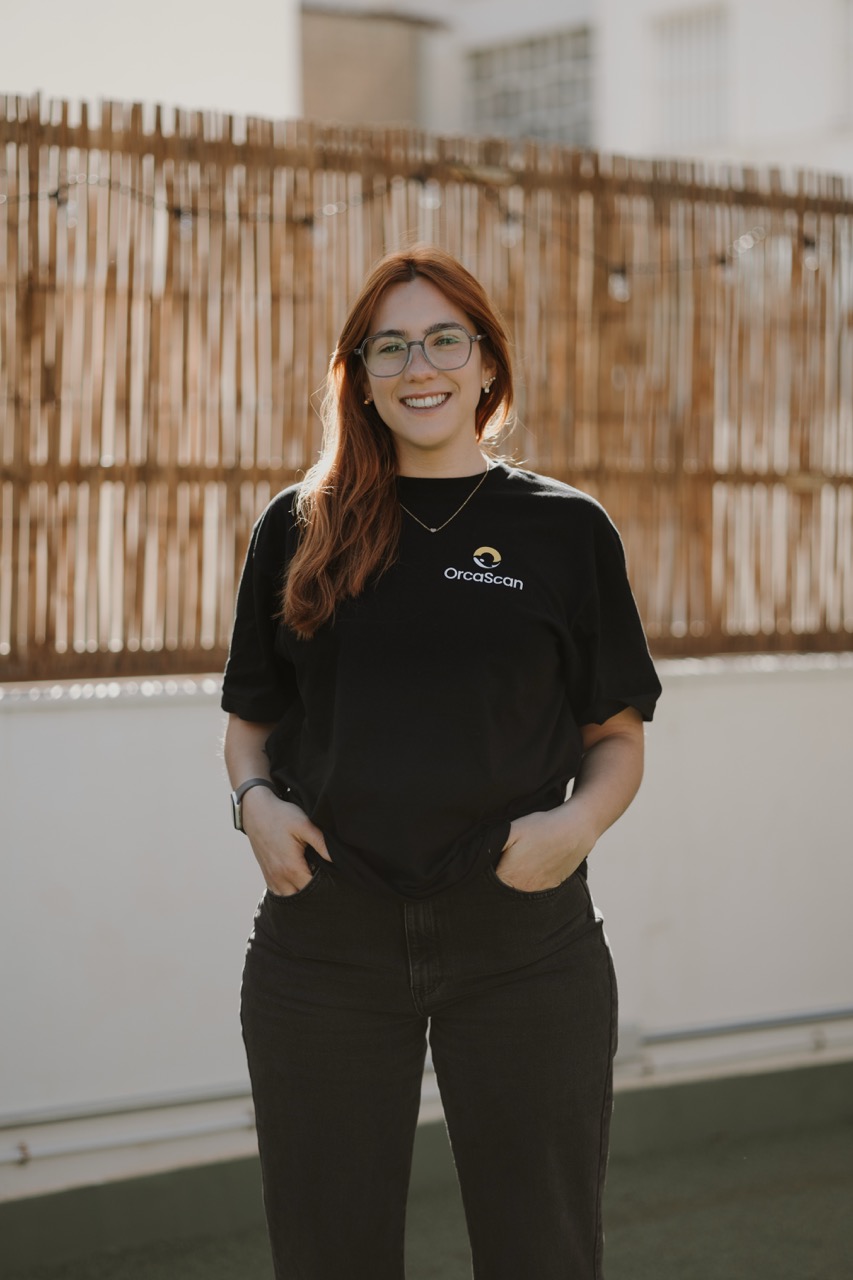
A little bit of context: Meet Carmela 💛
Name: Carmela Farias
Age: 30
Degree: Industrial Design
Current role: UX/UI designer
Orca-Anniversary: June 2023
What is your role, and how long have you been working at Orca Scan?
I’m a UX/UI Designer, and I’ve been part of the Orca Scan team since June 2023. My work covers the entire product design process, from understanding user needs to creating prototypes, iterating, and collaborating closely with developers to bring solutions to life.
Each sprint starts with a shared vision: what problems are we solving, and how can UX support that? I partner closely with my design lead and the broader team to explore solutions, refine flows, and ensure we’re not just designing features, but shaping the product with intention.
What I enjoy most is that I’m part of the process from start to finish - not just handing off screens, but contributing to the product’s direction in a meaningful way.
I’m fascinated by the invisible reasoning behind what we click, choose, ignore, or abandonCarmela FariasUX/UI DesignerOrca Scan
How do you start your day before getting stuck into work?
I would love to say that I wake up early in the morning and do a lot of stuff, but no, haha. I start slow: I take my dog, Fideo, out for a walk, get some fresh air, and then prepare my morning Mate🧉 (a daily ritual I never skip).
Before diving into tasks, I usually check on anything pending from the day before, clean up my notes, and list my top priorities. And if I hit a creative block mid-day, I’ll step away and go for a walk or hit the gym and come back with a clearer head. That balance is something I really value at Orca. We’re trusted to manage our own energy, which makes the work more sustainable and the outcomes stronger.
What led you to a career in UX/UI design?
In 2020, during lockdown, I was finishing my industrial design degree when I randomly tuned into an Instagram Live about UX. It caught my attention - the way they talked about user experience, design thinking, product. I had no background in tech at the time, but something about it just made sense.
While my studies were focused on physical products and technical drawing, I always gravitated toward digital tools. I started designing websites in 2019 with WordPress, just as a hobby, and people started paying me to make their websites. It was crazy for me, because I enjoyed making them; it was more of a hobby than a job.
So when I discovered UX, it felt like a natural next step. I started learning everything I could on my own, then earned a formal certification to ground my practice. My final project for the course was a mobile app that scanned barcodes to help users understand whether a product was healthy for them or not - which is funny now, considering I work at a company that specialises in barcode tracking.
One project I’m really proud of is the Figma plugin I built. I had never created a plugin before, and writing JavaScript felt scary, but with the help of the dev team and AI, I did it!Carmela FariasUX/UI DesignerOrca Scan
What excites you most about working at Orca?
What keeps me excited is the sense of ownership. The feeling that my ideas have weight and that I’m contributing to something that’s evolving. We’re not isolated into roles; we’re encouraged to think like product people, ask big questions, and bring ideas forward.
That culture of openness makes a huge difference. Feedback flows both ways, and we challenge each other to make things better - whether it’s a feature, a process, or a design detail. It’s a place where collaboration feels real.
And of course, working with people who care, not just about the product, but about how we work together. It makes it easy to stay motivated.
What do you love most about UX/UI?
What I love most about UX is that it’s never just about screens. It’s about logic, psychology, and how people make decisions. I’m fascinated by the invisible reasoning behind what we click, choose, ignore, or abandon.
User experience lets you analyse patterns, challenge assumptions, and understand how people interact with systems on a deeper level.
But to do that well, you can’t rely on what you learned in a course five years ago. You have to keep learning, stay curious, and constantly adapt. Trends in UI come and go, but shifts in user behaviour are what truly matter and I think that’s where the real work begins.
Can you walk us through a day in your life as a UX/ UI designer?
There’s no fixed recipe for a day in UX, but for me it usually starts with scanning through our Notion board. That’s my go-to place to stay on top of everything happening in the sprint: what I need to move forward, what needs testing, where devs might need support, or where I need to step in to make sure something is implemented correctly.
From there, I prioritise based on the kind of task. I usually tackle heavier thinking, like research, UX decisions, or planning in the morning when my head is clearer. In the afternoons, I shift to more structured work like UI, where the design system helps a lot and it’s more about applying the right patterns than reinventing the wheel.
Throughout the day, I keep in touch with the team either through async comments, chats, or jumping into a quick chat in spatial if something needs unblocking. I always try to stay aware of whether I’m blocking anyone, or if I need help to unblock myself. That awareness and constant communication is what keeps things moving.
One thing I really learned at Orca Scan is how important it is to have balance — between work, health, and personal lifeCarmela FariasUX/UI DesignerOrca Scan
What project are you particularly proud of and why?
One project I’m really proud of is the Figma plugin I built. I had never created a plugin before, and writing JavaScript felt scary, but with the help of the dev team and AI, I did it.
The plugin lets users generate barcodes directly inside their Figma files, and it’s now live in the Figma Community. It’s still a simple tool, but launching something that actually works, and seeing that people are actually using it, was a big moment for me.
It also helped me understand the product from a new angle: not just design, but functionality, constraints, and how devs think. More than anything, it gave me confidence to take on more complex projects and get closer to how things are really built.
You’ve recently started a course to learn code - what inspired you to take that step?
It all started with a conversation with our CEO, John. He suggested I learn some JavaScript to strengthen my design skills and be able to contribute in a more technical way. I won’t lie, I was a little bit scared of learning JS, it felt like a big unknown, but I believe that learning something new can only bring value.
I said yes, even knowing it would be hard. And honestly, it was! But it also opened a door. I started to see how understanding code could make me a better designer, not just for UI work, but for collaboration, feedback, and problem-solving.
That step led directly to the Figma plugin project, and now I’m exploring how to bring that hybrid mindset into more parts of my work. I don’t want to become a developer, but I do want to speak the language and help build better products by connecting both sides.
During my first weeks here, we talked openly about mental health, and that was completely new to meCarmela FariasUX/UI DesignerOrca Scan
How do you see your role evolving over the next year at Orca, especially with the new skills you are learning now?
Over the next year, I see my role evolving into something more hybrid - not just UX/UI execution, but deeper involvement in product thinking and technical collaboration.
Now that I understand more about how things are built, I can contribute earlier and more strategically. I’m asking better questions, proposing more complete solutions, and thinking beyond the design.
I’m not aiming to become a developer, but I do want to keep building things that work, not just things that look good. Whether it’s a prototype, a plugin, or a product idea, I want to keep exploring ways to deliver more value and with more impact.
Have you started integrating any of your coding skills into UX/UI projects yet?
Yes, mainly in how I work with developers. I understand better how they build things, especially how CSS is structured, and I try to organise my Figma files in a way that makes sense for them.
It also made me rethink how we do handoff. I pay more attention to naming, spacing, and how to make changes easier to understand. I want the design file to support the dev process, not just look good.
So even if I’m not coding directly, learning about it has changed the way I think and work.
What’s been the most challenging part of learning to code as a designer?
The hardest part was changing how I think.
As designers, we usually work with visible things - buttons, layers, screens. But when you start learning code, you see what’s underneath those things. You start to understand how a toggle or a button is actually built, how the structure works behind what we see in Figma.
That helped me improve how I explain design decisions. It’s not just “use this colour” or “add this shadow”, it’s also about knowing how to describe those details to developers, and why they matter.
The biggest challenge was breaking the mental model I had as a designer and trying to build a new one, more like a developer. Designers often work in a top-down way, like a flow. But devs work more like a network with dependencies, layers, logic.
And of course, learning how HTML, CSS and JavaScript all work together - that’s a whole other level. But for me, the hardest part was rebuilding the logic in my head.
So my advice is: keep learning. Explore new things. You don’t need to be perfect, and you don’t need to wait for permission. Just be curious, and go for itCarmela FariasUX/UI DesignerOrca Scan
Are there any tools or platforms that you have loved using in your career at Orca, that you’d recommend to other UX/UI designers?
Yes, a few. First, I’d say: stay organised. That’s something I wish I learned earlier. I used to be very all over the place - no clear goals, no deadlines, no structure. But having limits, systems, and rules really helps.
For me, Notion is key. I use it to track everything: what’s happening, what already happened, and why we made certain decisions. It helps me plan, stay on top of my tasks, and always have a record to go back to, especially when we revisit old features or need to understand what went wrong.
Second: learn to use metrics. I’m still learning too, but tools like Hotjar and Grafana give you a lot of insights. At first, they can feel overwhelming, but they’re super useful to support design decisions with real data.
And when I need solid answers about UX behaviours, my go-to is the Nielsen Norman Group. That’s where I find the best content about UX principles, patterns, and user behaviour. It’s my reference for everything.
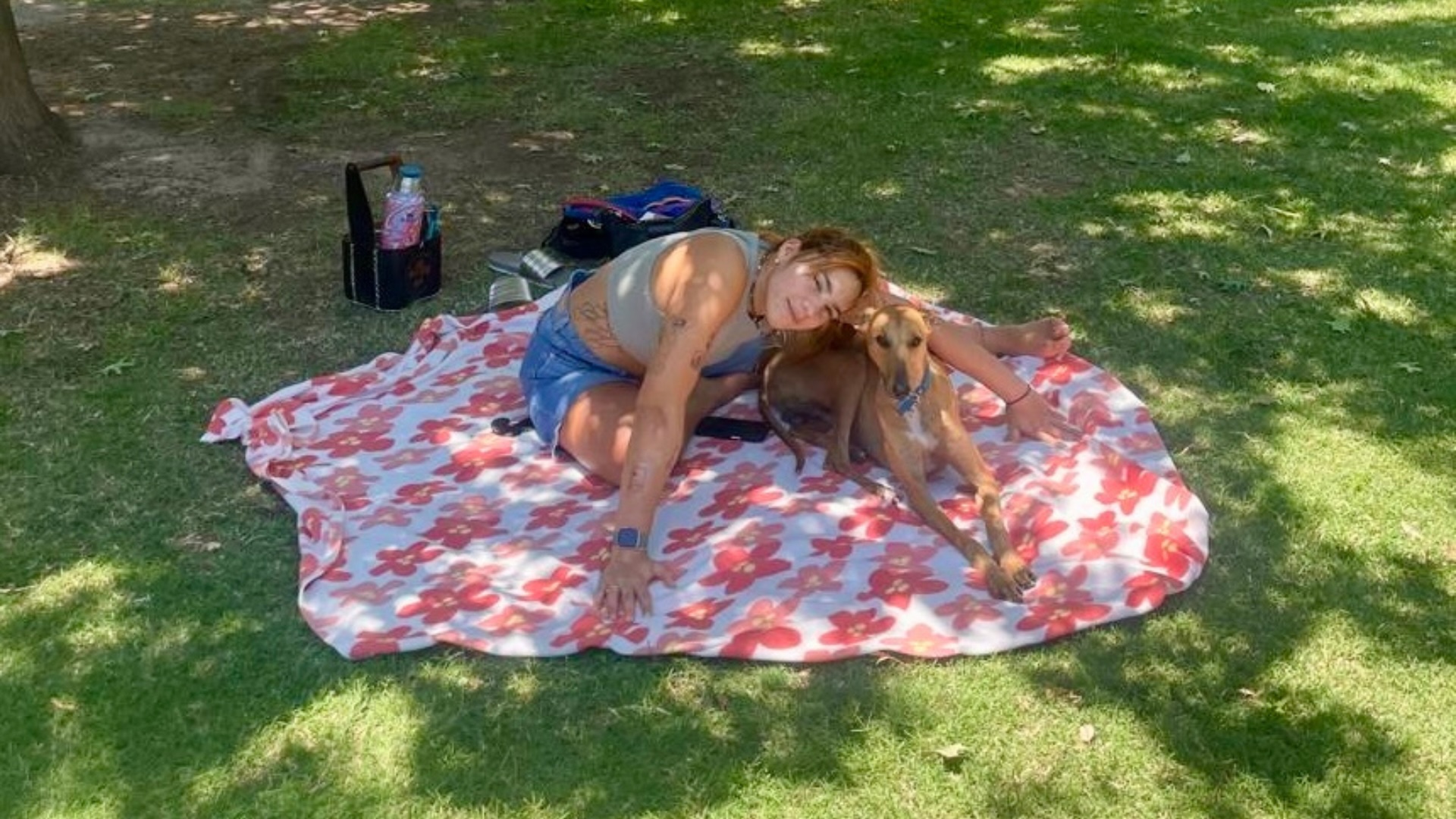
We love Fideo! How do you balance work, life and being a dog mum? 🐶
Fideo is the best part of my day. We rescued him in December 2024 after he was hit by a car on the road. We took care of him, and now he’s fully recovered and part of the family. I love having him by my side while I work, he’s always next to me, and it makes everything better.
One thing I really learned at Orca Scan is how important it is to have balance - between work, health, and personal life. During my first weeks here, we talked openly about mental health, and that was completely new to me.
Now I take it seriously. If I feel my mind isn’t working well, I give myself a break. And having Fideo helps a lot with that. We go for a walk every morning, and usually again in the afternoon.
So yes, it’s a mix of work, walks, cuddles, and taking care of both of us. And it makes me really happy.
When you’re not designing or coding, how do you like to unwind? Any hobbies you’d like to share?
In general, I enjoy being active. I love walking, going to the gym, being outside - anything except running (I hate running!). Right now I’m also getting back into ceramics, which is one of my favourite activities ever.
I also enjoy cultural stuff like going to the theatre, live music, small local events. Anything that brings people together around something creative or fun. And of course, spending time with friends and family is always at the top of my list.
If there’s one thing this journey has taught me, it’s that staying curious, open, and hands-on leads to the best outcomesCarmela FariasUX/UI DesignerOrca Scan
What advice would you give to designers looking to experiment and learn new skills like you have?
Whenever you have the opportunity to learn something new, take it. It’s normal to feel unsure when something is new, but learning always brings value, even if it’s not directly related to your role.
I had a professor in university who once told us:
“Maybe one day you’ll open a hot dog stand - and it’ll still be the best one around, because everything you learned will stay with you.”
That stuck with me. At the time, I wasn’t sure if I had chosen the right career. But that phrase helped me see that every skill I gain will be useful somehow, even if I don’t see how yet.
So my advice is: keep learning. Explore new things. You don’t need to be perfect, and you don’t need to wait for permission. Just be curious, and go for it.
Finally, what does your professional future look like for you? Any big goals or projects you’d love to work on?
I know my role will keep evolving, and I want to grow with it - not just as a designer, but as someone who can think across UX, product, and strategy. I want to keep adding skills that help me bring more value to the team and to the product.
There are already a few projects in the pipeline that I’m really excited about. They challenge me to use everything I’ve been learning, from design to code to user thinking, and that’s exactly the kind of work I want more of.
If there’s one thing this journey has taught me, it’s that staying curious, open, and hands-on leads to the best outcomes. And that’s how I want to keep working - with purpose, with people I trust, and with the drive to keep building things that matter.
If you want to see more of our great team, and the fun we get up to behind the scenes, check out our socials - LinkedIn & Instagram.