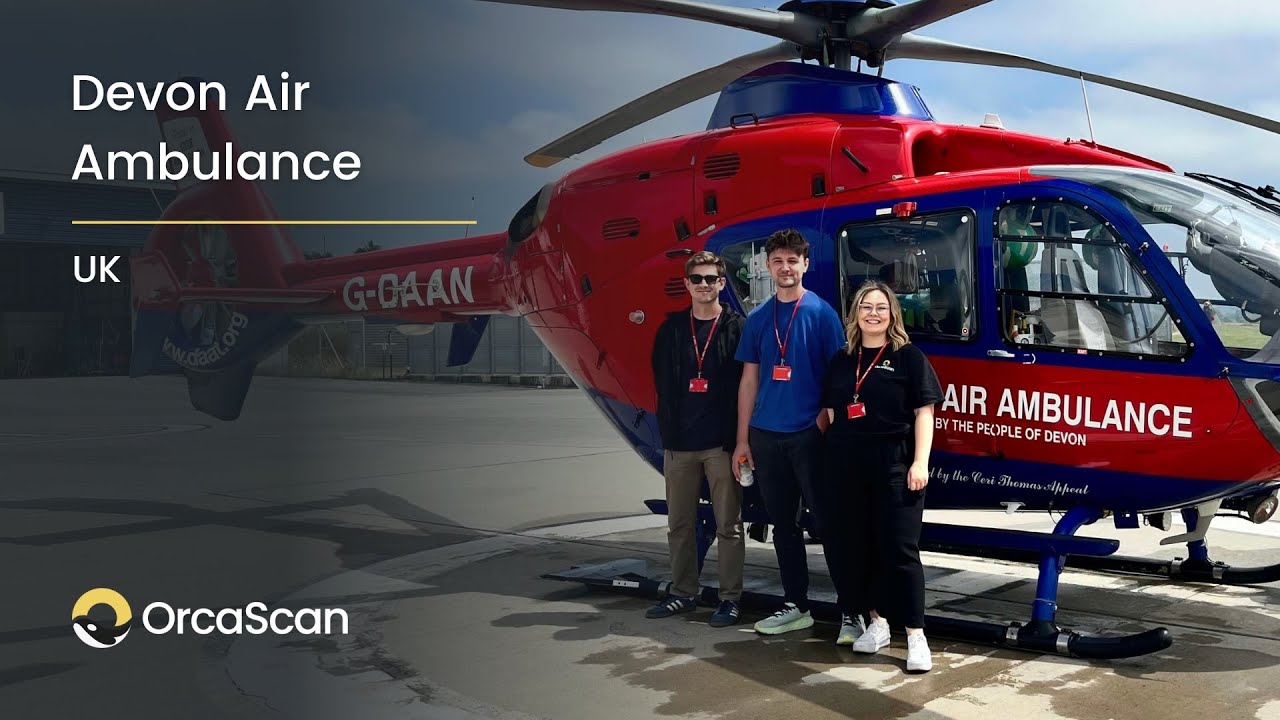
Devon Air Ambulance provides an advanced level of critical care directly to patients across the county of Devon in the South West of England, with their two state-of-the-art helicopters, a fleet of Critical Care Cars and team of specialist paramedics and doctors.
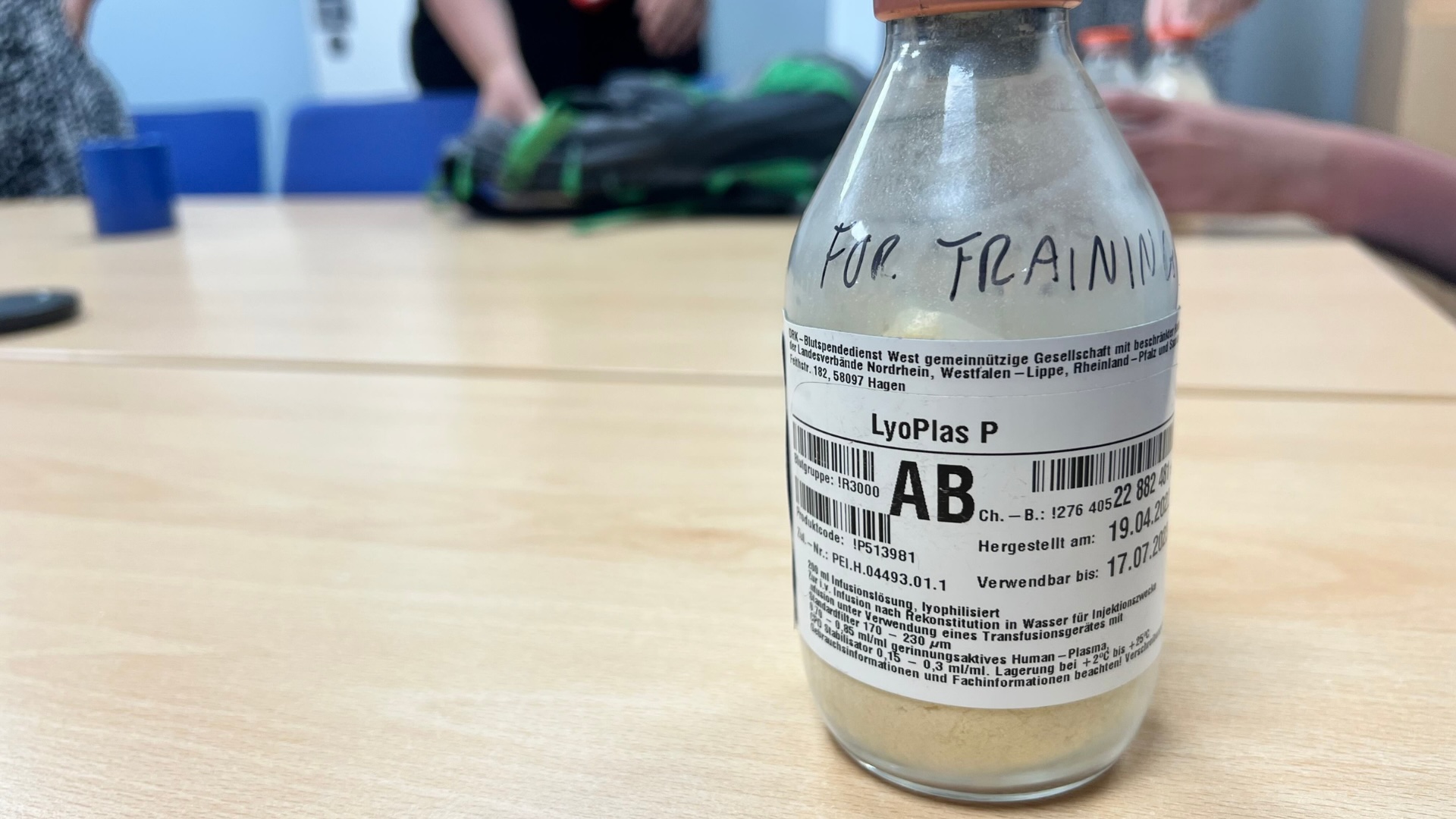
One of their most vital resources is Lyoplas, a freeze-dried plasma that can be administered on scene to help save lives.
Since 2022, Devon Air Ambulance has been using Orca Scan to track Lyoplas from the blood bank to the patient - ensuring full traceability, audit readiness, and peace of mind in critical moments.
A little bit of context
Devon Air Ambulance has been clinically independent since 2019 and directly employs their specialist crew and pilots. They also receive no government funding, relying entirely on public support to keep responding across Devon and the neighbouring counties. This gives the charity the freedom to choose the systems, treatments, equipment, and clinical protocols that best serve their patients and teams.
The service operates from two main airbases at Exeter Airport and Eaglescott Airfield in North Devon.
Their highly skilled team of critical care paramedics, doctors and pilots, work in collaboration with the HEMS (Helicopter Emergency Medical Service) dispatch team, who are employed by SWAST. It is the HEMS dispatch team who determine which ‘999’ emergency calls require the deployment of air ambulance resources. Once dispatched, the Devon Air Ambulance team responds to these incidents, delivering expert care at the scene. Support for patients doesn’t end there - their dedicated Patient and Family Support team continues to provide compassionate follow-up care, offering guidance and assistance not only to patients but also to their families and any bystanders who may have been affected or have questions about the incident or are seeking advice about further help and groups they may like to connect with.
The challenge
Devon Air Ambulance has responded to over 35,000 missions to date, and every treatment administered must be recorded in patient records and in detail for regulatory and clinical auditing purposes. This is especially important for a clinically independent service like theirs.
Previously, when Lyoplas had been administered to a patient, teams would record details on scene on kneeboards using a marker and then retrospectively transfer the information to the electronic patient record. Support Teams would record and track usage on a separate spreadsheet.
However, in the high-pressure environment of prehospital emergency care, the manual entry of the long Lyoplas unit numbers was prone to errors, which made the tracking and traceability audits challenging.
The team required a robust digital solution that could accurately record administration information, offer reliable search functionality for patient IDs and mission dates and track temperature compliance. That’s where Orca Scan came in 👇
The solution
The Devon Air Ambulance team is using Orca Scan to simplify and bring full visibility to their Lyoplas stock. Tracking the usage, temperature compliance and the location of each unit from the blood bank to the patient.
Orca Scan makes the transfer of products a lot easier, especially for the FreewheelersAaron BushnellHEMS Technical Crew MemberDevon Air Ambulance
Lyoplas must be kept at a specific temperature to remain safe for use. Each unit is fitted with a TinyTag - a small device that flashes green if the Lyoplas remains within a safe temperature range, or red if it deviates from this range.
With Orca Scan, the team has created a full end-to-end tracking process:
- Ordered from the manufacturer Units of Lyoplas are ordered and delivered to the blood bank in Exeter.
- Scanned into storage As each bottle is placed into the fridge at the blood bank, it is scanned into Orca Scan, recording its initial location, expiry date and temperature status.
- Collected by Devon Freewheelers When an airbase needs more Lyoplas, the team contact the Devon Freewheelers - a volunteer group of motorcyclists who provide free courier services to the Air Ambulance. They scan the unit out of the blood bank, record its temperature status, TinyTag number and bag number.
- Delivered to base and scanned in On arrival at either the Exeter or Eaglescott airbase, the Lyoplas is scanned again to confirm its delivery location, the time of arrival and the temperature status.
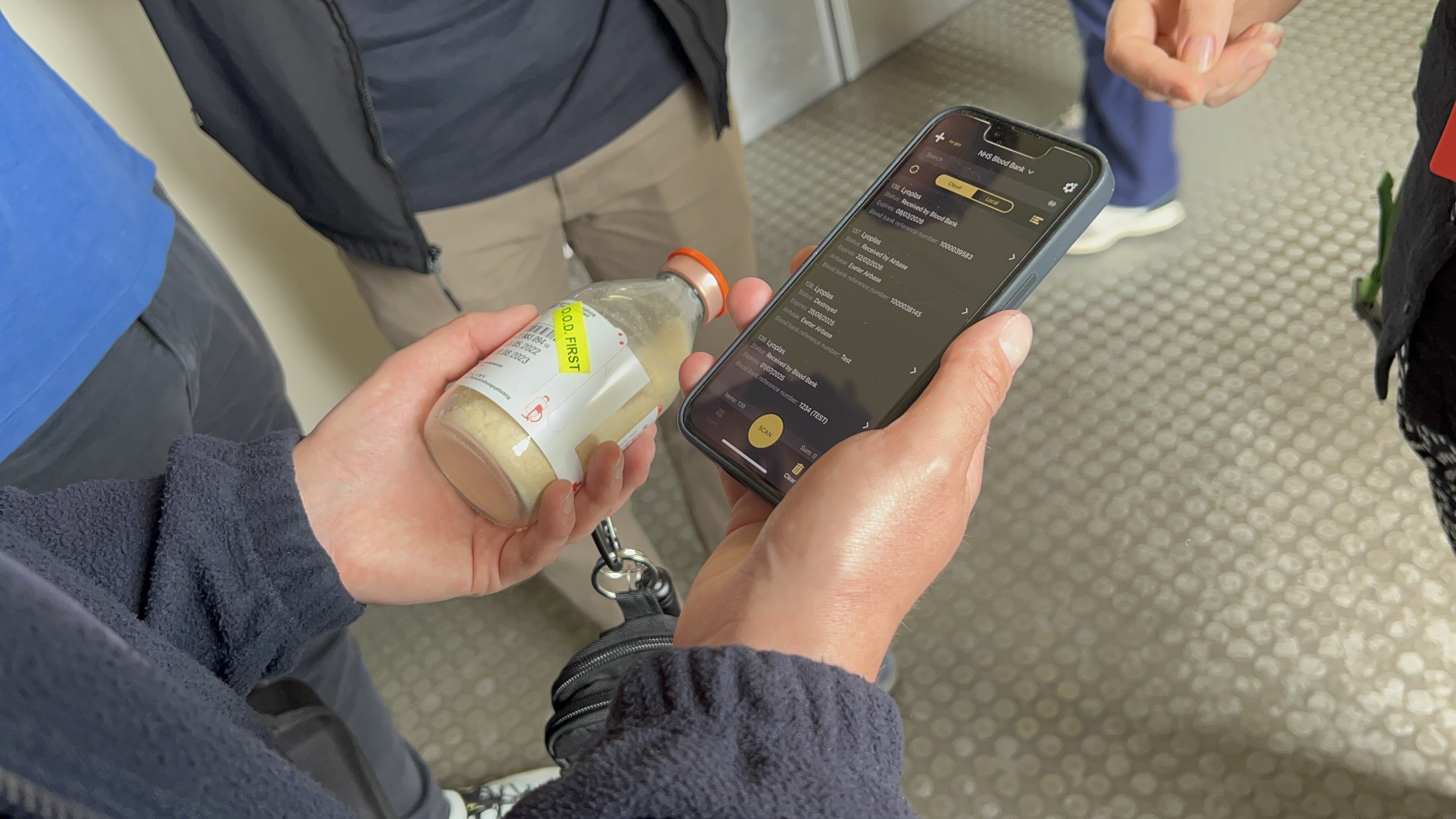
- Administered to a patient Each unit of Lyoplas has a unique barcode sticker. When a unit is used the crew can scan it immediately. This ensures the data is recorded, even if conditions on scene make it difficult.
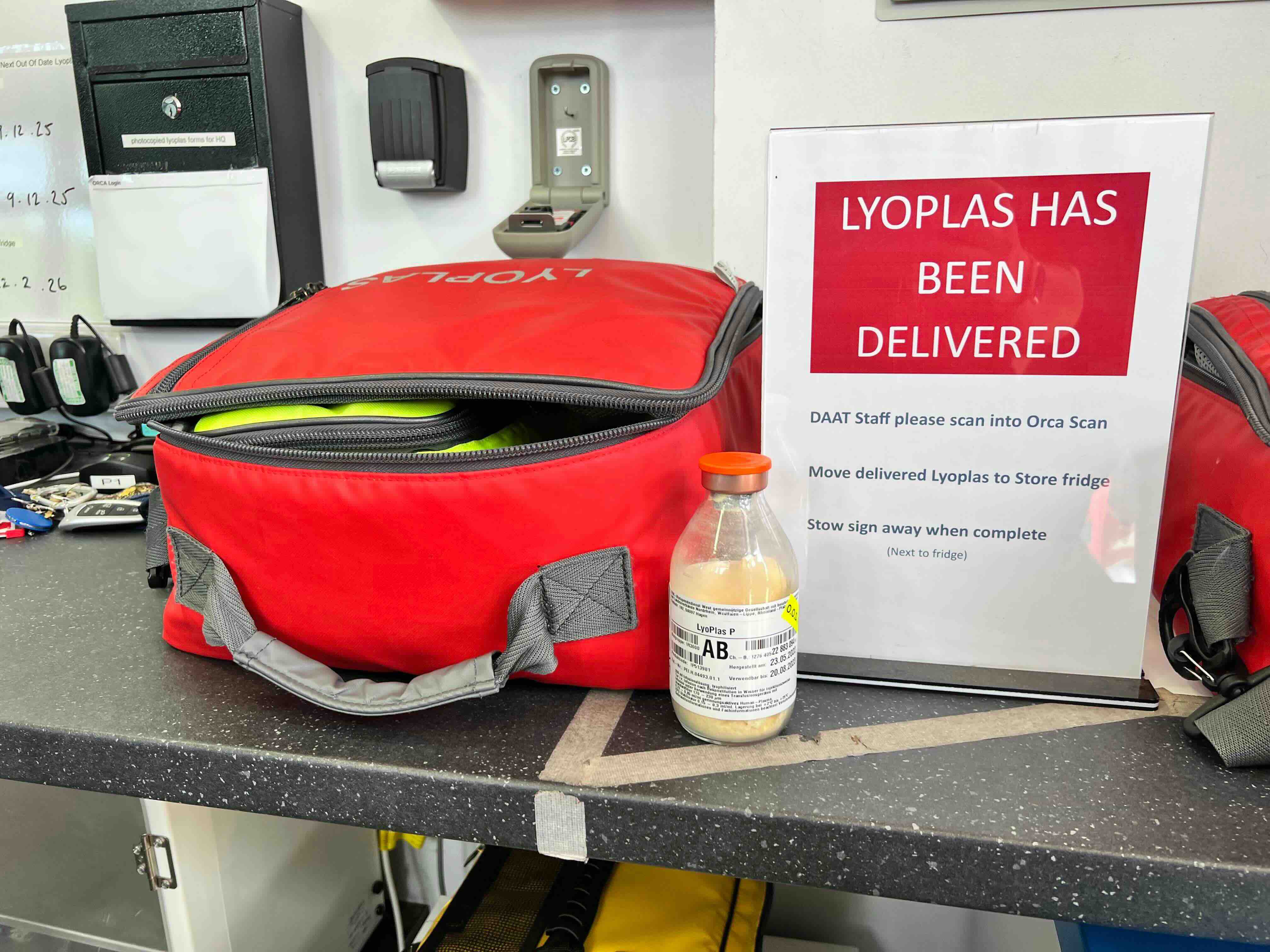
If a unit is drawn up, but then not administered, this is also logged in Orca Scan as ‘drawn up not used’. If a unit goes out of date, then it is scanned and listed as ‘Ready for destruction’, ‘Destroyed’ or ‘Training’ - depending on the outcome.
Each stage of the journey has a dedicated sheet, where users are prompted to confirm:
- The current location of the unit
- The temperature status of the TinyTag (green or red)
- The expiry date
- The usage outcome (administered, not used, destroyed, training)
This ensures every Lyoplas unit is fully traceable from blood bank to patient.
Has the solution been successful?
Since implementing Orca Scan, the Devon Air Ambulance team has seen major improvements and time saved across the board.
Better inventory management
When a unit is used, the team immediately knows to restock. A new bottle can be requested and delivered, ensuring each base always has the correct number of live bags (ready-to-go kits containing emergency plasma) ready for deployment.
Better Audit Preparations
If a unit is selected for audit, they have a complete digital audit trail that shows when Lyoplas was delivered, when it was administered, the patient ID number and whether it remained temperature compliant at every stage of its journey.
Less wastage
If a Lyoplas TinyTag flashes red, it must be isolated and assessed. It can often be reintroduced into circulation if the temperature breach has been minimal, larger breaches mean the unit is decommissioned and used for training. With Orca Scan, the team has more visibility when the TinyTag status changes, giving them a better chance of keeping the unit in circulation. This reduces waste and has significant cost savings - with each Lyoplas unit costing over £270, those savings directly support frontline care.
More time for what matters: saving lives
Having all data instantly available and easy to input means crews can spend less time on paperwork and more time focused on saving lives.
In fact, the solution has been so successful that the team are now exploring other areas of the service where Orca Scan can help provide greater clarity, visibility, and confidence - from equipment tracking to consumables management.
Thank you 🙏
A huge thank you to Cat Hawkins, Catherine Moss-Crump, Hannah Trebilcock, and the entire Devon Air Ambulance team for working with us on this solution, and for welcoming us to your Exeter base to see it in action.
We’re proud to support the Devon Air Ambulance in making their lifesaving work just a little easier, every single day. 💙